Written and fact-checked by: Rocket Zheng
Last verified:
This guide is written for foreign travelers who are seriously considering Mount Tai. Not just an introduction, but a guide to help you actually get up there and back.
Before you read further: Mount Tai requires advance real-name online reservation. Foreign visitors must book with their passport information and bring the original passport on the day. You cannot buy a ticket at the gate.
Is Mount Tai worth visiting?
Yes, and genuinely so.
Mount Tai isn’t China’s tallest mountain, and it’s not the most dramatically “mystical” landscape in the country either. What makes it different is that it isn’t purely a natural sight. It’s a mountain that is alive with people, stories, and centuries of history at every step. It’s best suited to travelers who enjoy cultural landscapes, historic routes, and a physically demanding but non-technical climb.
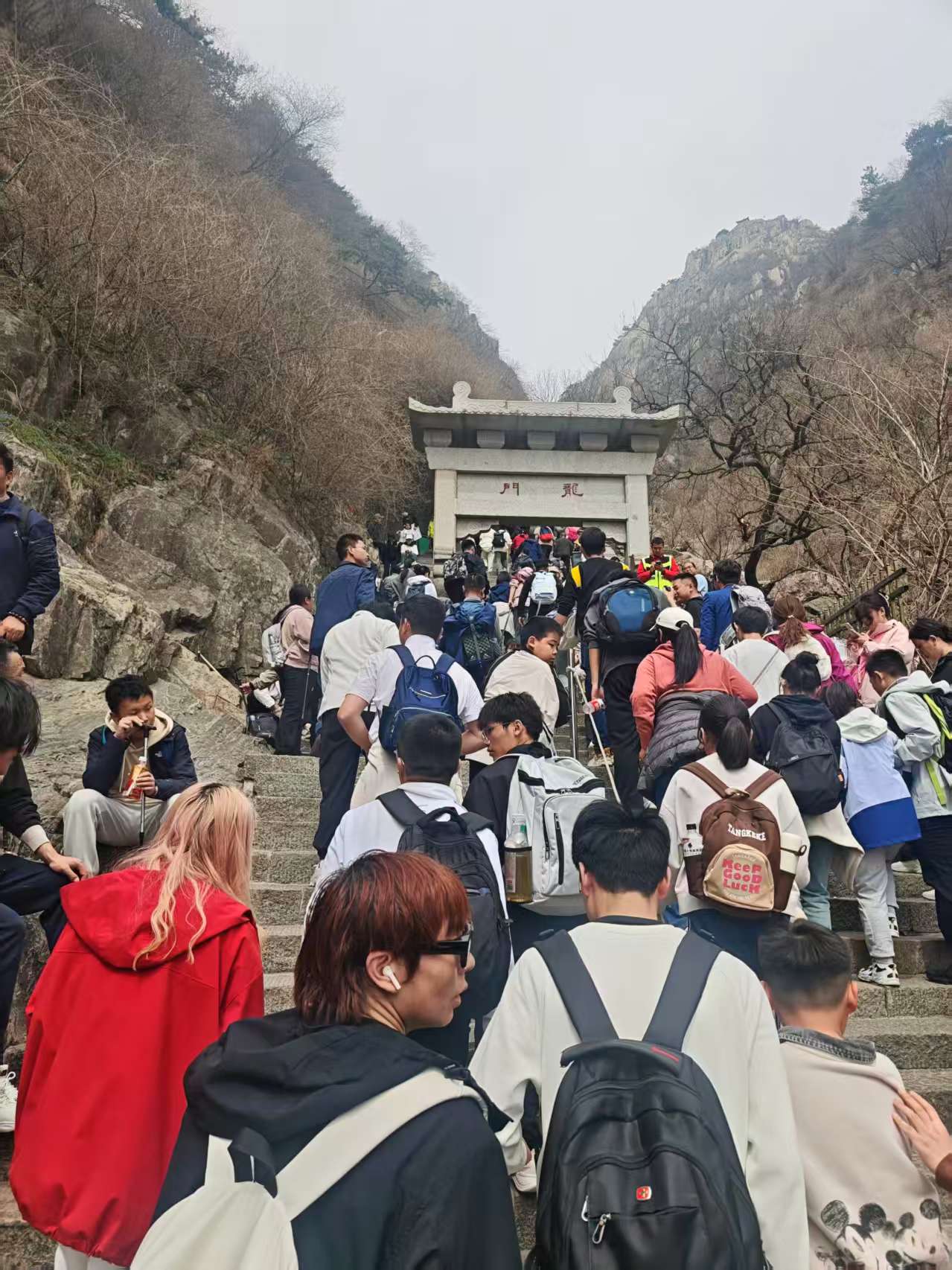
Walking up from the Hongmen (Red Gate) entrance, you pass ancient temples, stone archways, and inscriptions carved dense into the rock face. You pass vendors selling water and instant noodles. You pass other people breathing just as hard as you are. The appeal of Mount Tai isn’t just the summit. It’s the whole journey up.
Mount Tai is not a wilderness hike in the Western sense. The main route is essentially one long stone staircase from the base to the top: well-marked, regularly supplied, and very hard to get lost on. What it is, though, is a lot of stairs. That’s the only real challenge.
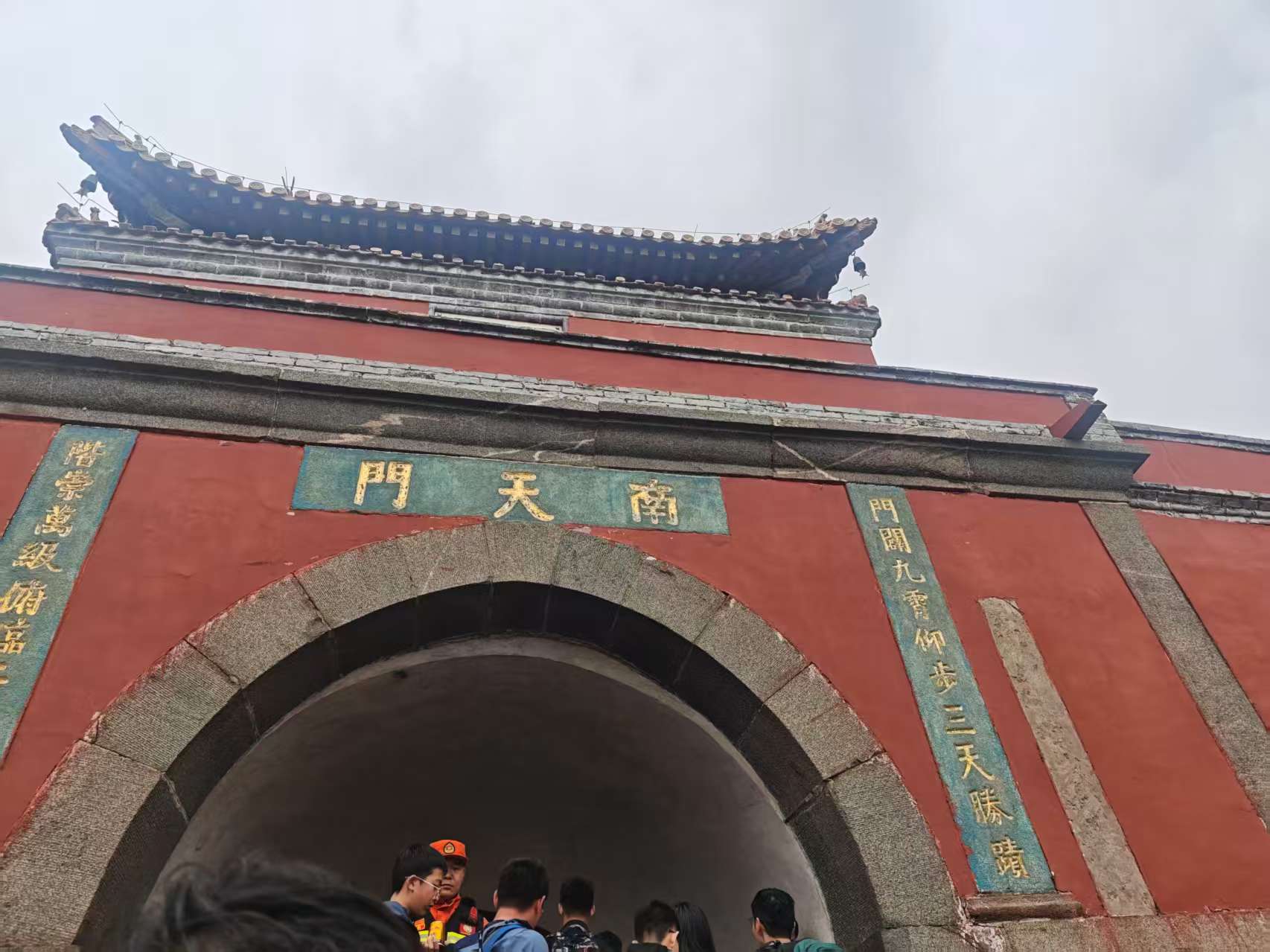
If it’s your first time, the route I’d recommend is: enter at Hongmen, hike up to Zhongtianmen (Middle Heaven Gate), continue to Nantianmen (South Heaven Gate) and the summit; on the way down, take the cable car from Nantianmen back to Zhongtianmen, then the shuttle bus out to Tianwaicun. You get the full classic experience going up, and you spare your knees coming down.
How difficult is Mount Tai?
Difficulty: moderate to hard, mainly because of the sheer number of stairs, not altitude or technical terrain.
From Hongmen to the summit takes most people 4-6 hours. The hardest section is after Zhongtianmen, especially the famous Eighteen Bends (Shibapan), a steep, dense stretch of stairs where a lot of people hit their wall and realize this mountain means business. The main route is extremely well-maintained, with vendors, toilets, and rest stops along the way. You’re not going to end up on a deserted hillside.
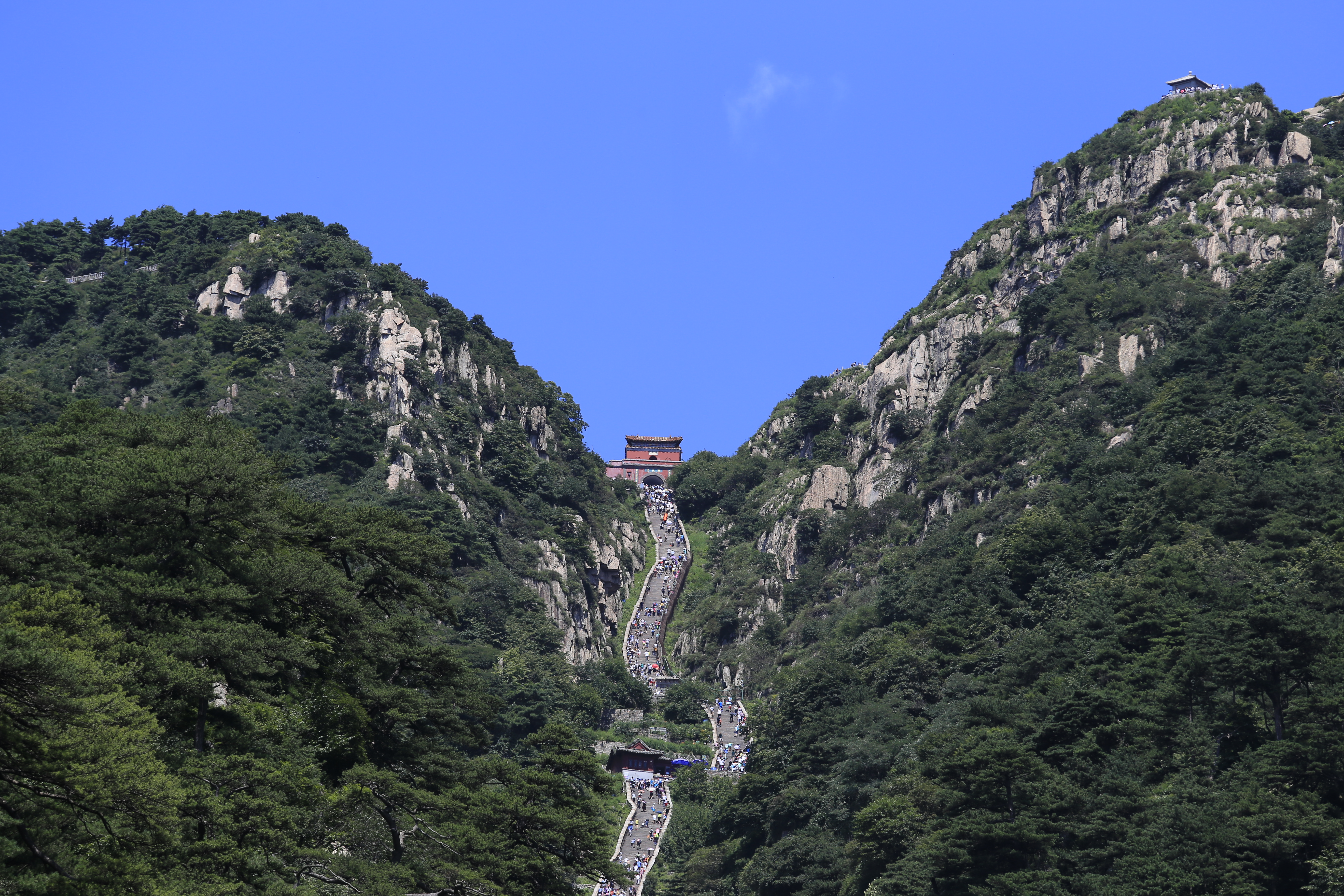
What people tend to underestimate is the descent. Going up is exhausting, but willpower carries you forward. Going down is a long, knee-grinding descent on stone stairs, and it does more damage than most people expect. If you’ve already hiked up from Hongmen, there’s no shame, and plenty of good reason, to take the cable car and shuttle bus down.
- If you don’t exercise much: consider switching to the cable car at Zhongtianmen on the way up
- Traveling with elderly relatives or young children: the Tianwaicun route (shuttle bus + cable car) makes more sense
- Knees already a concern: take the cable car down, no exceptions
Best route for first-time visitors
| Route | Best for | Effort | What you miss |
|---|---|---|---|
| Hongmen | First-timers wanting the classic experience | Hard | Nothing essential |
| Tianwaicun | Families, older travelers, limited fitness | Easy-moderate | Lower temples and inscriptions |
| Taohuayu | Second visits, spring scenery | Moderate | Main cultural route |
| Tianzhufeng | Nature-focused hikers | Moderate-hard | Classic Mount Tai experience |
Hongmen: the one to do your first time
Entering from Hongmen is the classic route, following the ceremonial approach associated with imperial visits and centuries of pilgrimage. It is also convenient from Tai’an city: a taxi from the city center to Hongmen usually costs around ¥15 (Chinese yuan, RMB). The route covers about 9.5 km and 7,863 steps, passing Daizong Archway, Hongmen Palace, Doumu Palace, Sutra Rock Valley, Zhongtianmen, the Five Pine Trees, the Eighteen Bends, Nantianmen, Tianmen Street, and Bixia Temple before reaching the summit at Jade Emperor Peak (Yuhuang Ding). By the time you finish, you’ll have a pretty clear feel for why this mountain matters in Chinese culture.
Zhongtianmen is a critical decision point: keep climbing or switch to the cable car. If you have the energy, push through. The stretch from Zhongtianmen to Nantianmen is harder, but it’s also the section you’ll remember most.
Tianwaicun: for families and those with limited energy
Tianwaicun (literally, “the village beyond the sky”) sits on the western side of the mountain. After buying your ticket, you board a scenic area shuttle bus (around ¥35) that drives you up to Zhongtianmen in about 30 minutes, skipping the lower mountain entirely. From there, you take the cable car to the top.
It’s significantly easier, but you miss most of the cultural highlights along the Hongmen path: the temples, the inscriptions, the whole texture of what makes Mount Tai what it is. If you’re with older relatives, young kids, or genuinely have limited fitness, this is the sensible call.
Taohuayu and Tianzhufeng: save these for a second visit
Taohuayu (Peach Blossom Valley) is beautiful in spring and noticeably quieter than the main routes. Tianzhufeng (Heavenly Candle Peak) offers waterfalls and natural scenery, a wilder side of the mountain that most visitors never see. Neither is the right choice for a first visit. They’re best appreciated once you already know the main mountain and want something different.
Day climb or night climb?
Do you have to stay on the summit?
Not necessarily. There are two ways: sleep on the summit, or do a night climb.
Staying on the summit means waking up without any rush and watching the sky change from the top. The catch: summit guesthouses have fewer than 1,000 beds total, they fill up fast in peak season, they’re not cheap, and the conditions are basic. It’s not a comfortable mountaintop hotel experience. It’s more like paying a price for the convenience of already being there.
The night climb works differently. You leave Hongmen around 10 or 11 pm, hike for 5-6 hours through the night, arrive at the summit before dawn, and wait for the light to come. The route is lit the entire way, and you’ll be sharing the path with plenty of others doing the same thing. You save the cost of a summit room, and you get to see the city lights of Tai’an spread out below you in the dark. The downsides are real: it’s tiring, the second half of the night gets cold, waiting at the top is colder still, and the next day you’ll mostly want to sleep.
During major holidays, the night climb gets very crowded and is not really worth it under those conditions.
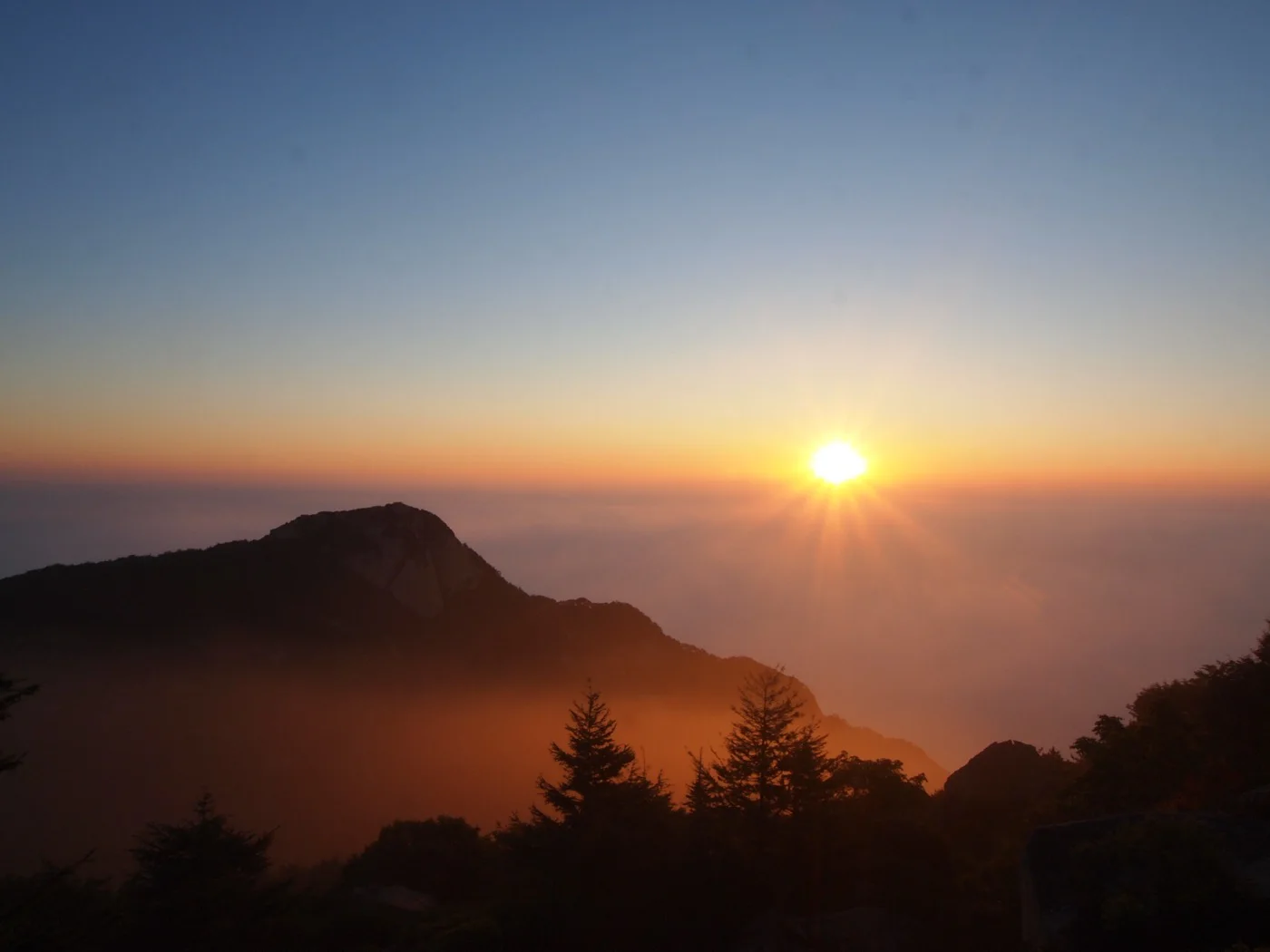
Sunrise is never guaranteed
Whether you see anything depends entirely on the weather at the summit that morning: cloud cover, visibility, wind. Autumn gives you the best odds; in summer, low clouds and haze mean many people reach the top and see nothing at all. Check the forecast before you go, but know that even a clear prediction can change quickly once you’re up there.
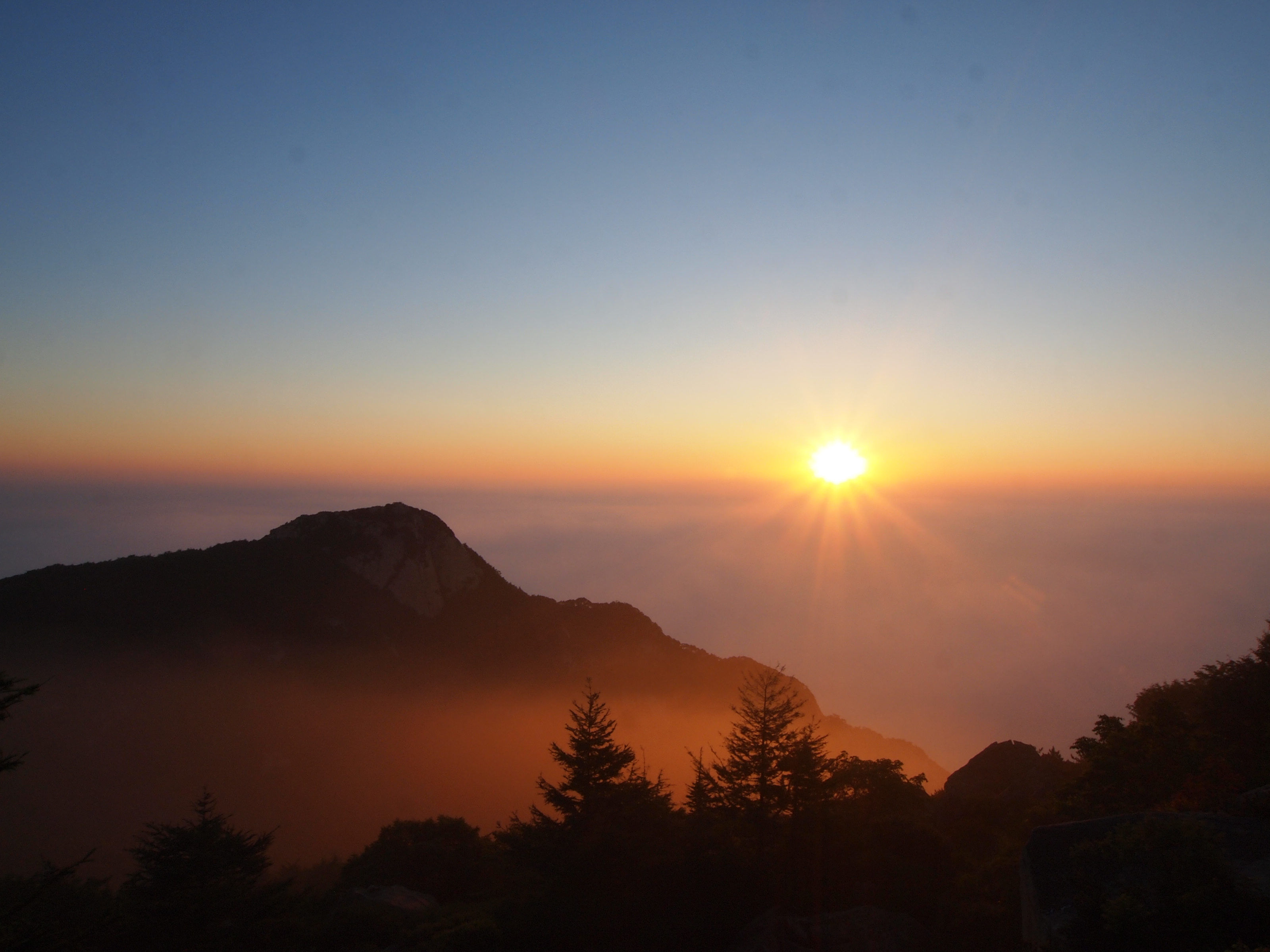
If you see it, it’s extraordinary. If you don’t, the trip hasn’t failed. The mountain just wasn’t in the mood.
The best spots are Riguanfeng (Sun Watching Peak) and the area around Gongbeishi, a large flat-topped rock just east of the summit. Both offer open views, and both will be busy on any morning with a decent forecast.
Tickets and passport check
Mount Tai operates a fully real-name reservation system. All visitors must book in advance online; walk-up purchases are not available. Reservations open up to 7 days ahead, and during major holidays, tickets sell out within days of opening.
Reference ticket prices (verify before your trip, as these can change):
- Peak season (Feb 1-Nov 30): approx. ¥125 per person
- Off-season (Dec 1-Jan 31): approx. ¥100 per person
- Valid for 3 days from first use, with multiple entries allowed
The most reliable booking channels are the official “泰山景区” (Mount Tai Scenic Area) WeChat Official Account or the “泰山旅游游客服务平台” WeChat Mini Program. If you’re not set up on WeChat, try the Mount Tai overseas ticketing platform (supports Visa/Mastercard, available in multiple languages and currencies) or Trip.com.
Entry process for foreign visitors:
Foreign visitors have one extra step. When booking online, select “passport” as your ID type and enter your passport number. After your reservation is confirmed, go to the dedicated counter at the visitor center, show your original passport, and have staff verify and activate your ticket. You then enter through the staffed gate rather than the automatic turnstile.
It sounds like more bureaucracy than it is. Staff handle foreign passport verification regularly. Just arrive with enough time before your entry window and don’t cut it close.
Bring your original passport. A photo or photocopy won’t work.
Once activated, the ticket is valid for 3 days across multiple entry points.
The entrance ticket doesn’t cover everything. The shuttle bus on the Tianwaicun route costs around ¥35 per person; the Zhongtianmen-Nantianmen cable car is around ¥100 one way. Both can be purchased on the spot.
Prices and booking rules can change, especially around holidays. Check the official channels before your trip.
Where to stay
Staying in Tai’an city the night before the climb is the right call for most people. Hotels are reasonably priced, there’s plenty of choice, and a taxi to Hongmen costs around ¥15. If you want an early start from Hongmen, staying near the gate is even more convenient. You can walk straight there.
Summit accommodation is expensive, hard to book in peak season, and the conditions are basic. Worth considering only if you’re set on catching sunrise without doing the night climb.
One practical note for foreign visitors: stick to larger, well-reviewed properties on platforms like Trip.com, Booking.com, or Agoda. Very small local guesthouses sometimes aren’t set up to process foreign passport registrations, which can cause friction at check-in.
What to pack
The main route has vendors the entire way: water, drinks, instant noodles, snacks, rain ponchos, gloves, and warm layers can all be bought on the mountain. You don’t need to pack like you’re heading into the backcountry.
Water especially: don’t carry too much. It’s heavy, and by the time you’re grinding through the upper sections, every extra gram registers. A better approach is to bring a reusable bottle. Many rest stops and vendors offer free hot water along the route. In cold weather, this is genuinely the better option anyway.
Buy a simple wooden walking stick at the base, especially if you plan to walk down any part of the mountain. Vendors near Hongmen usually sell them for around ¥5. It may look unnecessary at first, but after thousands of stone steps, your knees will understand. If your knees are already a concern, bring proper trekking poles from home.
If you’re staying for sunrise, it gets genuinely cold at the top. You can rent a padded military-style coat for around ¥20-30 near Nantianmen. Rent there rather than lower on the mountain, as returning them at a different location can cause problems.
Other things worth having:
- Original passport (required for entry activation)
- Comfortable, non-slip shoes or hiking boots. Don’t wear dress shoes, sandals, flip-flops, or brand-new shoes
- A light jacket or layer
- A power bank (cold temperatures drain batteries faster than you’d expect)
- Some cash in small notes, especially if you don’t use WeChat Pay or Alipay
- A rain poncho if there’s any chance of rain
- In winter: proper anti-slip footwear. The steps ice over and it’s genuinely dangerous
Bring a 5-yuan Note
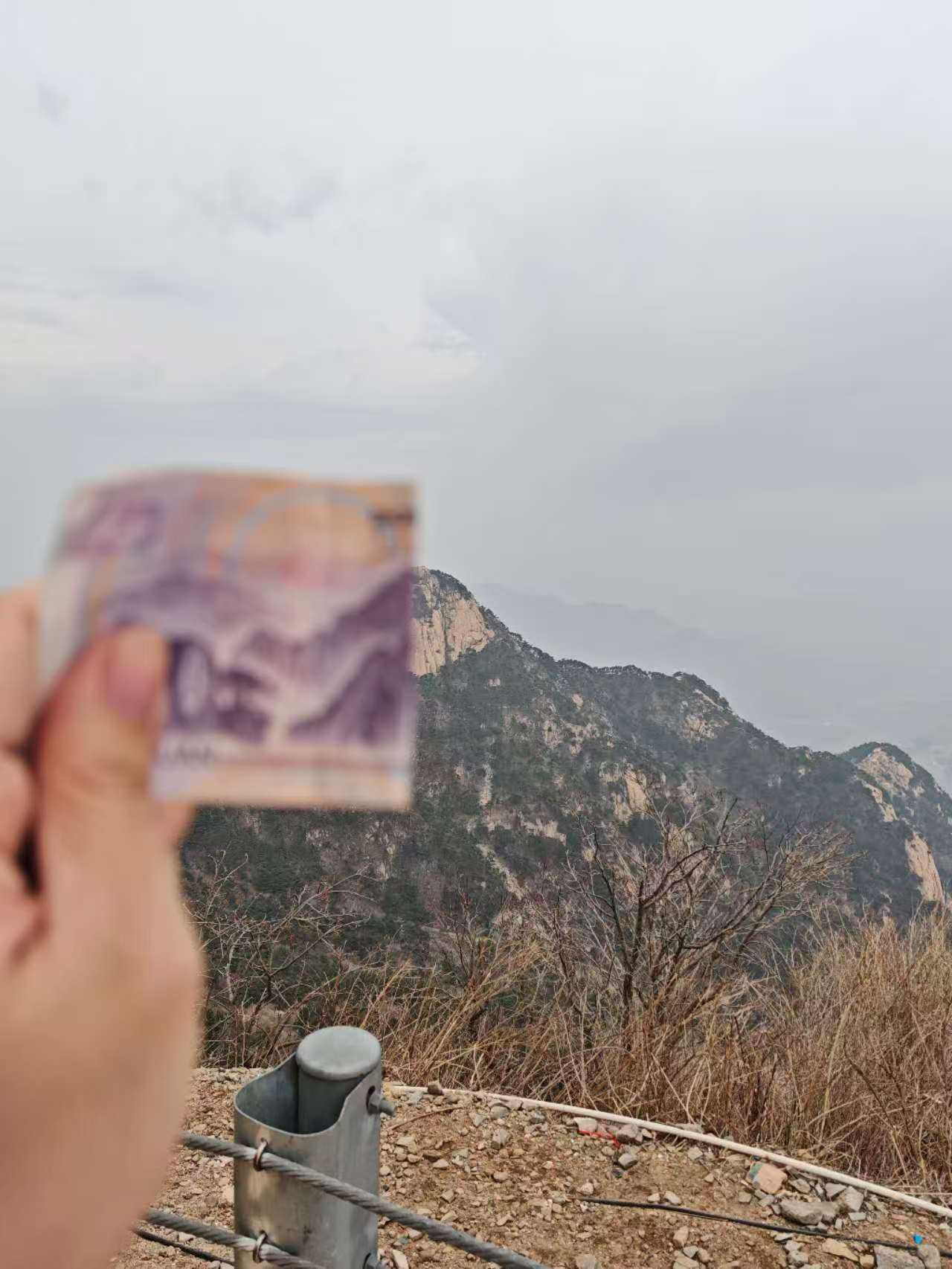
Near the summit, there’s a famous stone inscription reading 五岳独尊, “Supreme among the Five Sacred Mountains.” This exact view appears on the back of China’s 5-yuan note.
Bring one. When you get there, hold the note up next to the real thing and take a photo. It’s one of those moments that feels more memorable than it has any right to be, and you’ll see plenty of Chinese visitors doing the same. If you don’t have a 5-yuan note on you, ask someone nearby. People are almost always happy to lend one for a photo.
Getting to Tai’an
There’s no airport in Tai’an. Almost everyone arrives by high-speed rail.
Tai’an has two train stations that are easy to confuse. Pay attention to the English names on booking apps:
- Tai’an Station: the high-speed rail station on the Beijing-Shanghai line, about 6.5 km from the city center. This is where you’ll arrive if you’re coming from Beijing, Shanghai, or Jinan by high-speed train.
- Taishan Station: the older city-center station, served by conventional trains, and closer to the scenic area.
Rough travel times:
- From Beijing South: roughly 1.5-2 hours
- From Shanghai Hongqiao: roughly 3 hours
- From Jinan: about 20-40 minutes
From Tai’an Station, take Bus 37 directly to Hongmen, or a taxi for around ¥25-30. If it’s your first time and you have luggage, a taxi is the easier choice.
For tickets: use 12306 (China’s official rail platform), Trip.com, or the station window with your passport. You’ll need your original passport to buy tickets and to pass through the station gates.
Best time to visit
The best window is mid-September to early November.
Autumn weather is stable, visibility is good, the temperature is right for hiking, and sunrise odds are at their best for the year. The summit has a significant temperature swing between morning and afternoon, so bring a layer.
Spring (April-June) is also good: flowers on the hillsides, fresh air, though the mountain gets more rain, and wet stone steps are slippery.
Summer is doable but not ideal: crowded during school holidays, and the humidity is high. Winter has real charm when there’s snow and the crowds disappear, but the steps ice over and temperatures at the summit can drop to -20°C. Not recommended unless you know what you’re doing.
Avoid Golden Week (Oct 1-7) and the Labor Day holiday (May 1-5).
These are the two biggest domestic holiday periods in China, and Mount Tai is one of the country’s most famous destinations. During these windows, cable car queues run to two hours or more, the paths are packed shoulder-to-shoulder, and the whole experience becomes something closer to a crowd management exercise. The Spring Festival period and other minor holidays are similar. If your schedule is flexible, a weekday outside of holiday periods is a genuinely different mountain.
Cultural background
Mount Tai is not important because of its height. At 1,532 meters, it’s not especially imposing by Chinese standards. Its significance is entirely cultural, and in Chinese culture, that significance runs very deep.
It’s called the “Chief of the Five Sacred Mountains.” For thousands of years, emperors made the journey here to perform the Fengshan ritual, a ceremony that announced their legitimacy to heaven and earth. Confucius climbed it and left behind the observation that from the summit, his home state of Lu looked small. The Tang dynasty poet Du Fu wrote his most famous lines here: “I must reach the very top, and see how small all other mountains are.” The historian Sima Qian used it as a measure of everything that matters: “A death may be weightier than Mount Tai, or lighter than a feather”, a phrase still widely used in Chinese today.
The stone inscriptions, archways, and temples you pass on the way up aren’t decoration. They’re the accumulated marks of generations of Chinese people who came here to stand in front of something larger than themselves.
That’s what makes Mount Tai unusual: it’s simultaneously a mountain and a kind of historical corridor. Walking up it, you’re moving through natural scenery and through thousands of years of Chinese thinking about ambition, heaven, and what it means to stand at the top of something.
Suggested Itineraries
Option 1: Classic daytime route (recommended for most first-timers)
Stay the night before in the city or near Hongmen. Start from Hongmen in the morning, hike up through Zhongtianmen and the Eighteen Bends to Nantianmen. Explore Tianmen Street, Jade Emperor Peak, and the summit area. When you’re done, take the cable car from Nantianmen down to Zhongtianmen, then the shuttle bus to Tianwaicun, and head back to the city.
The most balanced option: full classic experience going up, without turning the descent into punishment.
Option 2: Night climb for sunrise
For younger, fitter travelers willing to commit to the experience. Leave Hongmen around 10 or 11 pm, hike through the night (5-6 hours), arrive at the summit before dawn, and wait. After sunrise, spend some time at the top, then take the cable car and shuttle bus down.
It’s memorable. It’s also exhausting. And the sunrise is not guaranteed.
Option 3: Easy version
For families with elderly relatives or children, or anyone with limited fitness. Take the shuttle bus from Tianwaicun up to Zhongtianmen, the cable car to Nantianmen, walk around the summit area, and return the same way.
You miss the lower mountain’s temples and inscriptions, but it’s a lot more manageable.
Don’t approach Mount Tai as just another tourist sight, and don’t approach it as a serious outdoor expedition either. It’s more like a Chinese ritual of climbing: starting at the edge of a city, making your way up through steps and temples and stone-carved words. You’ll get tired. You’ll wonder at some point why you’re doing this. And then you’ll reach Nantianmen, and walk to the summit, and it’ll make sense.
For a first visit: walk up from Hongmen, take the cable car down, and treat the climb as part hike, part cultural ritual.
May there be wind to clear the clouds when you reach the top.
FAQ
Is Mount Tai worth it for foreign visitors?
Yes, especially if you enjoy cultural landscapes, historic routes, and a physically demanding but non-technical climb.
Do I need to climb all the way up Mount Tai?
No. Many visitors use the Tianwaicun shuttle bus and cable car, or hike up from Hongmen and take the cable car down.
Can foreign visitors buy Mount Tai tickets at the gate?
The current guide assumes advance real-name online reservation is required. Verify rules before travel and bring your original passport.
Is the Mount Tai night climb worth it?
It can be worth it for fit younger travelers or people who care a lot about sunrise, but it is tiring, cold near the top, and sunrise is never guaranteed.
Image Credits
Tai Shan 2015.08.12 11-18-27.jpg by Zhangzhugang, via Wikimedia Commons, licensed under CC BY-SA 4.0 . Resized for web.
泰山日出 - Sunrise at Mount Taishan - 2012.07 - panoramio.jpg by rheins, via Wikimedia Commons / originally from Panoramio, licensed under CC BY 3.0 . Resized for web.
Related guides
Nanyue Hengshan Travel Guide: How to Visit Mount Heng in Hunan
A practical travel guide for foreign visitors to Nanyue Hengshan in Hunan: Nanyue Temple, Zhurong Peak, scenic buses, tickets, transport, incense culture, and route advice.
Best Hiking Mountains in China for Foreign Visitors
Compare China's most worthwhile mountain routes for travelers who want more walking, more stairs, and a more physical mountain experience.