Written and fact-checked by: Rocket Zheng
Last verified:
Is Lushan Worth Visiting?
Yes. Lushan is worth visiting if you want a Chinese mountain that combines nature and culture without feeling like a pure climbing challenge.
The best things about Lushan are:
- Guling Town, a mountain town at about 1,000 meters above sea level;
- Sandie Waterfall, the famous three-tier waterfall;
- Jinxiu Valley, a scenic cliffside valley walk with mist, views, and macaques;
- Wulao Peak, one of the best hiking and viewpoint areas;
- Dakou Waterfall, an easier waterfall option than Sandie Waterfall;
- Hanpo Pass, a classic sunrise, cloud sea, and lake-view spot;
- historic villas, Meilu Villa, and modern Chinese history sites.
Lushan is especially good for travelers who like walking, cool mountain weather, misty scenery, and staying inside a scenic area rather than just rushing up and down a peak.
Lushan, Jiujiang, and Guling Town: What’s the Difference?
This is the first thing foreign visitors need to understand.
| Name | What It Means |
|---|---|
| Lushan / Mount Lu | The mountain scenic area in Jiangxi Province |
| Jiujiang | The nearby city and most useful transport base |
| Guling Town | The town on top of the mountain where many visitors stay |
| Lushan Railway Station | A railway station at the foot of the mountain, not on the mountain |
| Jiujiang Railway Station | A practical arrival point for many visitors |
| North Gate / South Gate | Main entry directions for getting up to the scenic area |
The most common mistake is assuming that Lushan Railway Station is already on the mountain. It is not. You still need to transfer to the scenic area and go up to Guling Town.
For many foreign travelers, arriving at Jiujiang and then going up through the North Gate is the most practical option.
Why Lushan Feels Different from Other Chinese Mountains
Lushan is not a sacred imperial mountain like Mount Tai, nor a dramatic cliff mountain like Mount Hua. It is famous as a World Cultural Landscape, a summer resort, a literary mountain, and a place where nature and history overlap.
Its identity comes from several layers:
- waterfalls and misty valleys;
- poetry and classical Chinese landscape imagination;
- Buddhist and Confucian sites around the mountain;
- the villa culture of Guling Town;
- modern political history, including Meilu Villa and the Lushan Conference Site;
- summer resort culture, because the mountain is much cooler than the lowlands.
That is why Lushan is best experienced slowly. If you only rush to one waterfall and leave, you miss much of what makes it special.
Best Routes for First-Time Visitors
To keep planning simple, here are four route choices that cover most visitors.
Route 1: Easy West-Line Day — Best for First-Time Visitors
Best for: first-time visitors, families, older travelers, light walkers
Main stops: Guling Town, Ruqin Lake, Flower Path, Jinxiu Valley, Xianren Cave
Time needed: 4–6 hours
Difficulty: easy to moderate
This is the best introduction to Lushan if you want a relaxed first day.
The west-line route is close to Guling Town and does not require a hard climb. You can walk around Ruqin Lake, visit Flower Path, continue into Jinxiu Valley, and finish near Xianren Cave. It gives you cliffside views, misty valleys, cultural stops, and an easy sense of why people like Lushan.
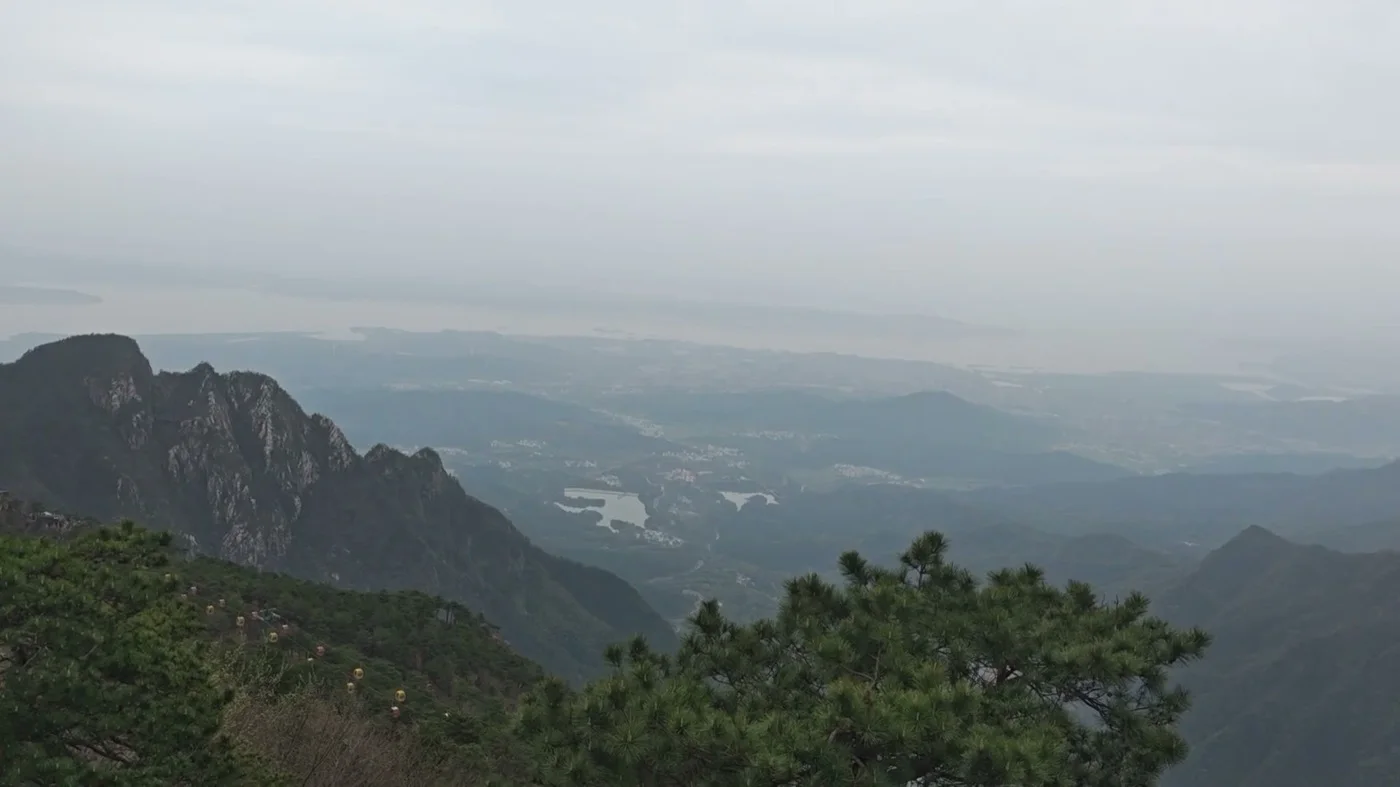
Jinxiu Valley is the highlight. The path runs along cliffs and forested slopes, and on misty days it can feel more atmospheric than on clear days.
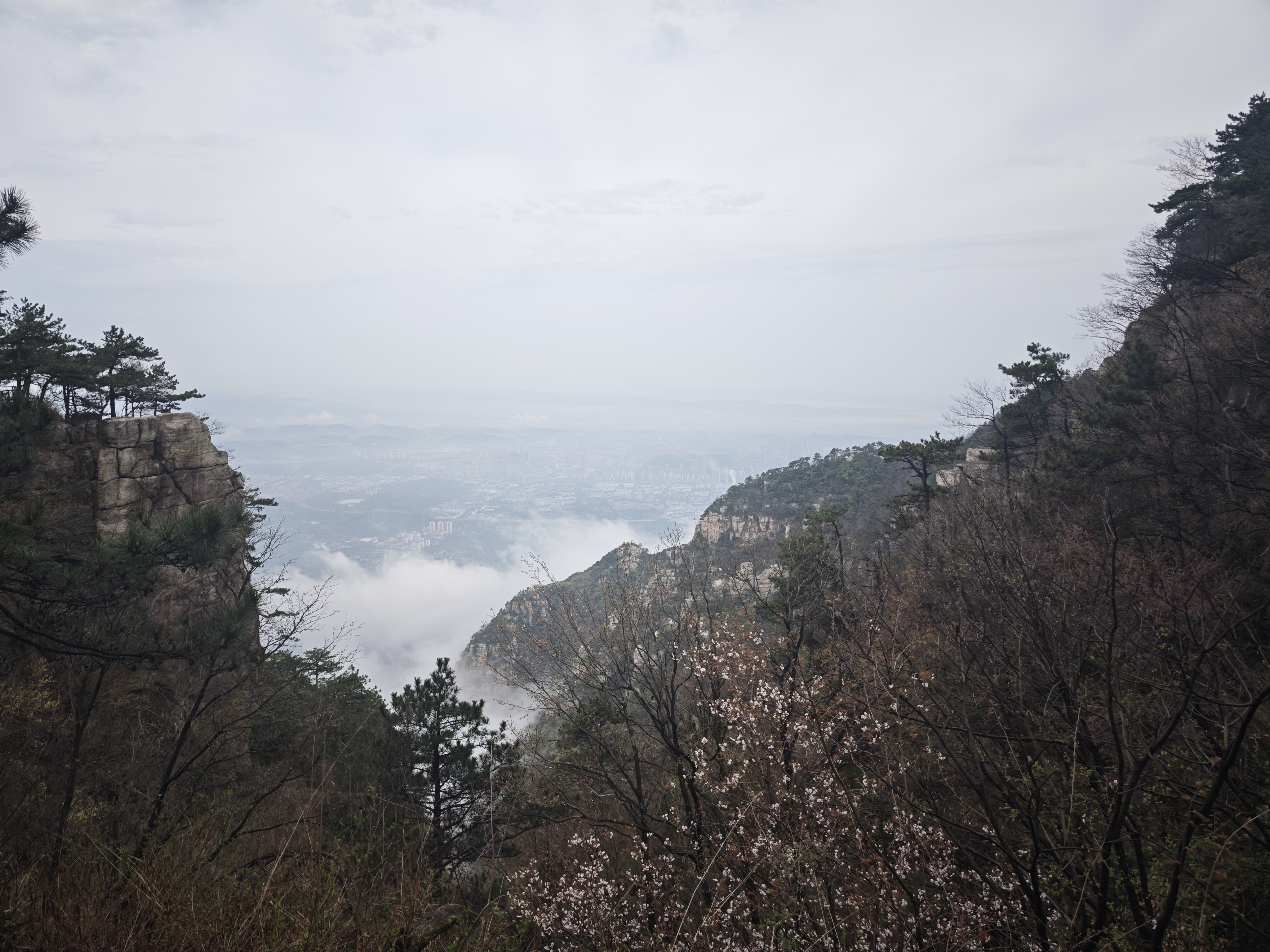
This route is also a good choice if the weather is not perfect. Fog may block long-distance views, but it can make the valley feel more beautiful.
Route 2: Sandie Waterfall — The Physical Challenge
Best for: fit travelers who want Lushan’s most famous waterfall
Main stop: Sandie Waterfall / Three-Tier Waterfall
Time needed: 4–5 hours, longer if slow
Difficulty: hard because of the stairs
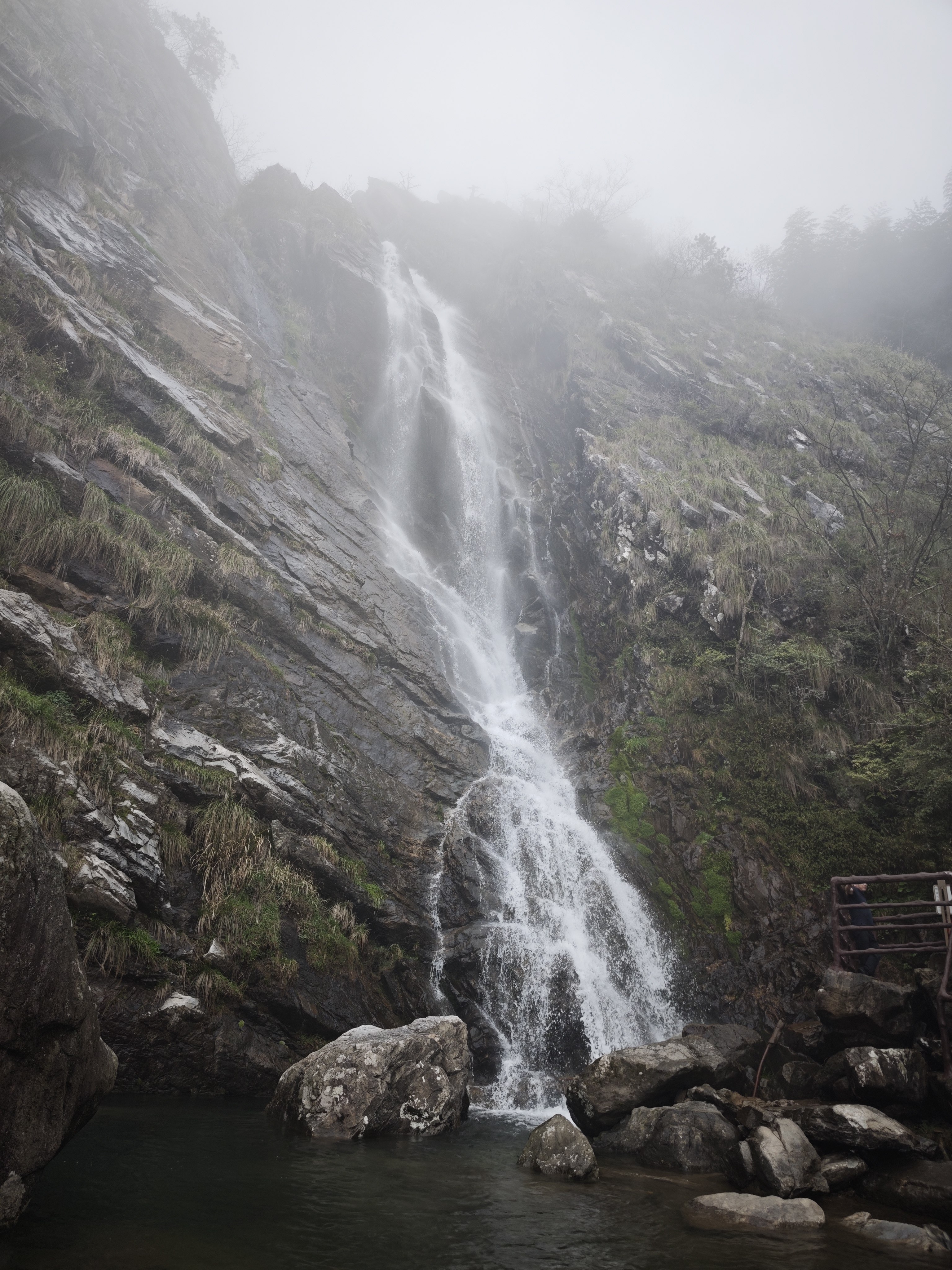
Sandie Waterfall is one of Lushan’s signature sights. The waterfall drops in three sections and is especially impressive after rain or during the wetter season.
But visitors often underestimate it.
The route involves a long descent and then a hard climb back up. Some sections are described as having thousands of steps. The difficult part is not going down; it is coming back up after you have already reached the waterfall.
There is a small rail / cable-style transport section that can save some walking, but it does not take you directly to the waterfall. You still need to walk many stairs.
Choose Sandie Waterfall if:
- you are fit;
- you are comfortable with many steps;
- you have enough time;
- your knees are healthy;
- the waterfall has decent water flow.
Skip it or choose Dakou Waterfall instead if you have knee problems, are traveling with elderly parents, or do not want a tiring half-day climb.
Route 3: Hanpo Pass + Dakou Waterfall — Easier Nature Route
Best for: travelers who want views and a waterfall without the Sandie Waterfall stair challenge
Main stops: Hanpo Pass, Lushan Botanical Garden, Dakou Waterfall
Time needed: 4–6 hours
Difficulty: easy to moderate
This route is a good alternative if you want a more manageable east-side experience.
Hanpo Pass is one of Lushan’s classic viewpoints. On clear days, it offers views toward Poyang Lake. In the right weather, it is also a good place for sunrise and cloud sea scenery.
Dakou Waterfall is easier to reach than Sandie Waterfall and has less punishing stair work. It is not as famous or as dramatic as Sandie Waterfall, but it is much friendlier for ordinary visitors.
This route is especially good if you want a balanced day with mountain views, light walking, and a waterfall without exhausting yourself.
Route 4: Two-Day Lushan — Best Overall Plan
Best for: most foreign visitors
Time needed: 2 days / 1 night
Difficulty: flexible
This is the plan I recommend most.
Day 1: Easy west line
- Arrive in Guling Town.
- Walk around Guling Town and Ruqin Lake.
- Visit Flower Path.
- Walk Jinxiu Valley.
- Continue to Xianren Cave.
- Have dinner and stay overnight in Guling Town.
Day 2: Choose one physical highlight
Choose one:
- Sandie Waterfall if you want the iconic waterfall and can handle stairs;
- Wulao Peak if you prefer ridge walking and views;
- Hanpo Pass + Dakou Waterfall if you want something easier.
This two-day plan is much better than a rushed one-day trip. It gives you time to enjoy Guling Town and reduces the risk of trying to do too much.
Best Things to See
Guling Town
Guling Town is one of the most distinctive parts of Lushan. Unlike many Chinese mountains where you only find hotels near the entrance, Lushan has a real town on the mountain.
It has restaurants, hotels, streets, historic villas, cafes, and a cool summer-resort atmosphere. In the evening, walking around Guling Town is part of the experience.
If you stay overnight, stay here if possible.
Jinxiu Valley
Jinxiu Valley is one of the easiest and most rewarding walks in Lushan. It has cliffside paths, forest, mist, valley views, and access toward Xianren Cave.
It is suitable for most visitors and works well as a first Lushan route.
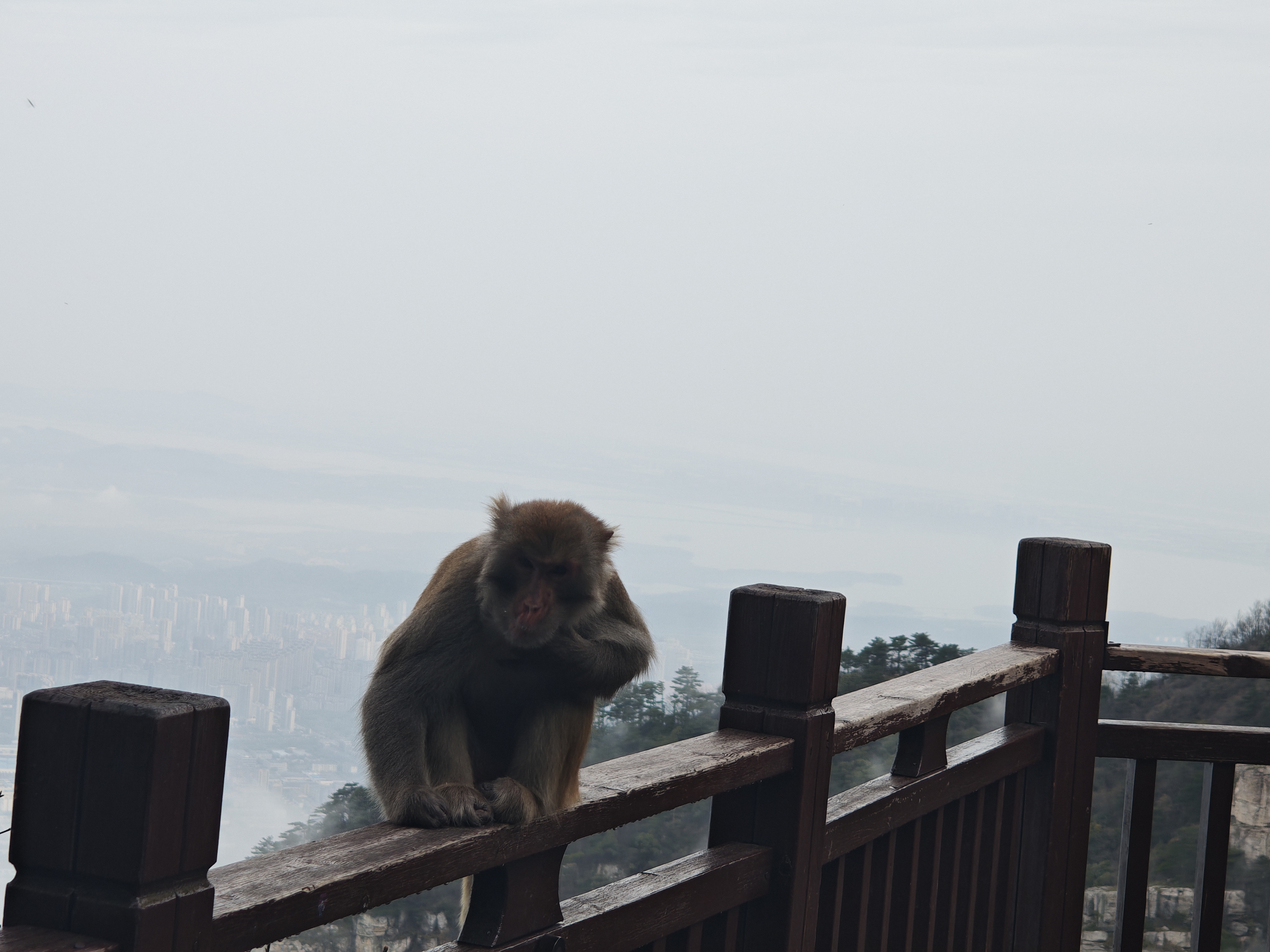
You may see macaques here. They can be fun to photograph from a distance, but keep your distance and never feed them.
Sandie Waterfall
Sandie Waterfall is Lushan’s iconic waterfall. It is worth seeing if you are fit enough, especially when water flow is good.
The key warning is simple:
Going down is easy. Coming back up is the real challenge.
Do not plan it as a quick photo stop. Treat it as a serious half-day outing.
There is a small train section for Sandie Waterfall that can save about 40 minutes of walking. The round-trip ticket is about RMB 80, with one-way uphill around RMB 55 and downhill around RMB 35. It is useful if you are tired, but it is not essential for everyone and does not remove the main stair challenge.
Dakou Waterfall
Dakou Waterfall is a better choice if you want a waterfall but do not want the difficulty of Sandie Waterfall. It is easier to access and more suitable for ordinary travelers.
Its water flow changes by season, so it is best after rain or during wetter months.
Wulao Peak
Wulao Peak is one of Lushan’s best hiking areas. It is a good choice if you want a real mountain walk and broad views. Many visitors do only part of the route rather than all five peaks.
For most travelers, walking to the earlier peaks is enough. Combining Wulao Peak and Sandie Waterfall in one day is possible but tiring.
Hanpo Pass
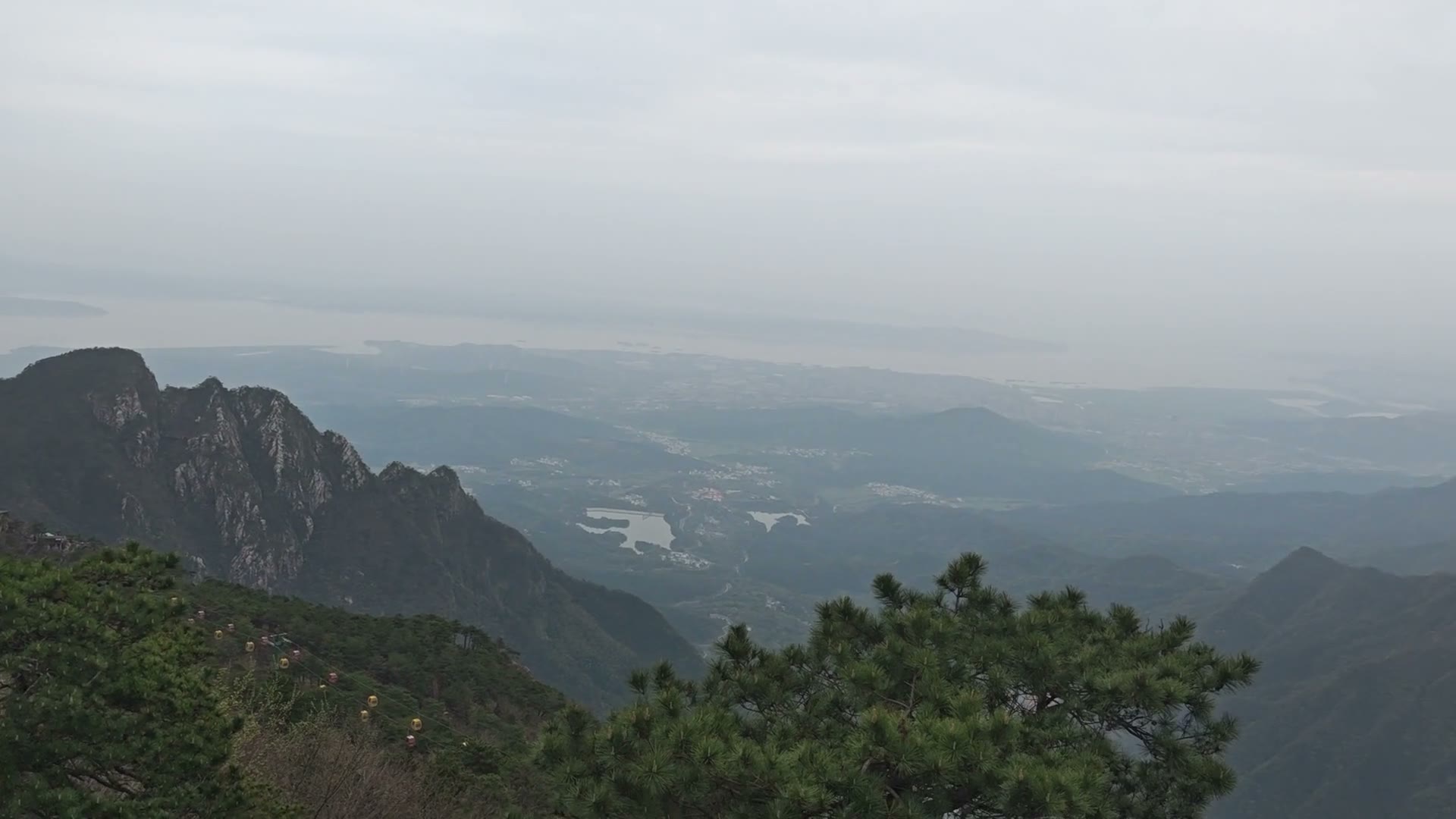
Hanpo Pass is one of the best places for sunrise, cloud sea, and views toward Poyang Lake. The experience depends heavily on weather. On foggy days, you may see very little distance, but the atmosphere can still be beautiful.
Meilu Villa and Lushan Conference Site
If you are interested in modern Chinese history, these sites are worth adding. They help explain why Lushan is not just a nature destination but also a cultural and political landscape.
Check opening days before going, because museum-style sites may close on certain weekdays.
How to Get to Lushan
From Jiujiang
Jiujiang is usually the most practical base.
A typical route is:
- Arrive at Jiujiang Railway Station.
- Go to the Lushan North Gate transfer center by bus, taxi, or ride-hailing.
- Buy or verify your ticket at the transfer center.
- Take the scenic-area bus up to Guling Town.
Travel time from Jiujiang to the mountain area is usually around 1–1.5 hours depending on traffic, transfer waiting time, and season.
If you enter from the West Gate, the cable car can take you up to Guling Town. The West Gate cable car round trip is about RMB 120. This can be convenient if you want a simpler transfer up the mountain, but check current operation times before relying on it.
From Lushan Railway Station
Lushan Railway Station is at the foot of the mountain, not on the mountain. From there, you still need to transfer to the South Gate area and continue up to Guling Town.
Do not choose Lushan Station only because of the name. Check your actual route to Guling Town before booking.
From Nanchang
A day trip from Nanchang is possible, but it is rushed. You need to take a train to Jiujiang or Lushan Station, transfer to the scenic area, go up the mountain, visit a limited set of sights, and return.
If possible, stay in Jiujiang or Guling Town instead.
Getting Around Inside Lushan
Lushan is large. Do not try to walk between all major sights.
Most visitors use the sightseeing bus system inside the scenic area. It connects Guling Town with the main east-line and west-line sights. The bus ticket is strongly recommended because attractions are far apart.
There is also an uphill / downhill cable car that connects the lower area with the mountain, but this is different from the sightseeing buses inside the scenic area.
If you are not self-driving, I strongly recommend buying the mountain sightseeing bus pass. It is about RMB 70 and is very convenient for moving between major sights. It is especially useful for visitors staying two days, because Lushan’s attractions are spread out and walking between everything is not realistic.
For planning, remember:
- sightseeing buses help you move between sights;
- some sights still require walking after the bus stop;
- Sandie Waterfall still requires many stairs;
- Wulao Peak requires hiking;
- Jinxiu Valley is mostly a walking route;
- rules and prices can change, so verify before travel.
Tickets, Passport, and Payment
Lushan uses ticketing and reservation systems that may be easier for Chinese ID users than for foreign passport holders.
Foreign visitors should be prepared to use the manual ticket window at the North Gate or South Gate transfer center if online booking with a passport is difficult.
The main Lushan entrance ticket is about RMB 160. Tickets are commonly handled through the WeChat mini-program 一机游庐山. This is also where visitors may find scenic-area ticketing and transport options.
Here is a practical cost reference:
| Item | Reference price | Should you buy it? |
|---|---|---|
| Lushan entrance ticket | RMB 160 | Yes, required for the scenic area |
| Mountain sightseeing bus pass | RMB 70 | Strongly recommended if you are not self-driving, especially for a two-day visit |
| West Gate cable car round trip | RMB 120 | Useful if entering by West Gate and going up to Guling Town |
| Sandie Waterfall small train round trip | RMB 80 | Optional; saves walking but does not remove the stair challenge |
| Sandie Waterfall small train uphill only | RMB 55 | Optional if you are tired |
| Sandie Waterfall small train downhill only | RMB 35 | Optional and usually less important |
A realistic basic two-day plan for a non-driving visitor is about RMB 230 for the entrance ticket plus sightseeing bus. If you also use the West Gate cable car, budget about RMB 350 before hotels and meals. If you add the Sandie Waterfall small train round trip, budget about RMB 430 before hotels and meals.
Bring:
- original passport;
- Alipay or WeChat Pay if possible;
- some RMB cash as backup;
- your hotel booking details;
- screenshots or translations of your destination names.
Ticket prices, sightseeing bus prices, cable car prices, and included sub-sites can change. Check the official Lushan mini-program or current Trip.com listing before traveling.
Where to Stay
Stay in Guling Town
This is the best option for most visitors.
For most foreign visitors, I strongly recommend staying in Guling Town if your budget and schedule allow it. Food, hotels, local transport, and access to west-line sights are all much easier from here, and the town itself is part of the Lushan experience.
Advantages:
- you are already on the mountain;
- easy access to west-line sights;
- better for sunrise or cloud sea planning;
- you avoid repeated up-and-down transfers;
- the town itself is part of the Lushan experience.
Before booking, confirm that your hotel can process foreign-passport registration. Some small guesthouses may be unfamiliar with the process or may not handle it smoothly.
Stay in Jiujiang
Good for one-day visitors or travelers on a tighter budget. Hotels are cheaper and transport connections are easier, but you lose time going up and down the mountain.
Stay in Nanchang
Not ideal as a Lushan base unless your main trip is in Nanchang and you only want a very short side trip.
How Hard Is Lushan?
Lushan is not uniformly difficult. The difficulty depends entirely on the route.
| Route | Difficulty |
|---|---|
| Guling Town, Ruqin Lake, Flower Path | Easy |
| Jinxiu Valley + Xianren Cave | Easy to moderate |
| Hanpo Pass + Dakou Waterfall | Easy to moderate |
| Wulao Peak | Moderate |
| Sandie Waterfall | Hard |
The most important warning is Sandie Waterfall. It is much harder than it looks on a map because of the down-and-up stair pattern.
Wear non-slip shoes. Lushan is often misty and wet, and stone steps can be slippery after rain.
Best Time to Visit
Spring
Good for flowers, mist, and stronger waterfall flow. It can be rainy, but the scenery is atmospheric.
Summer
Lushan is famous as a summer resort because it is much cooler than the lowlands. This is also the most crowded season, especially in July and August.
Autumn
Probably the best overall season. Weather is more stable, visibility can be better, and crowds are usually lower than in summer holidays.
Winter
Quiet and sometimes beautiful, but cold, icy, and less convenient. Not the best choice for first-time foreign visitors unless you specifically want winter scenery.
For waterfalls, late spring and early summer are usually better. For clear views, autumn is often safer. For misty valleys, Lushan can be beautiful even when visibility is limited.
Macaque Safety at Jinxiu Valley
Wild macaques may appear around Jinxiu Valley, Xianren Cave, and nearby areas. They are interesting to watch, but they are not pets.
Follow these rules:
- keep at least 3 meters / 10 feet away;
- do not feed them;
- do not hold snacks or drinks in your hand;
- keep food inside a closed backpack;
- do not stare directly at them or tease them;
- use zoom instead of moving close for photos;
- if a macaque approaches, stay calm and slowly move away;
- if you are scratched or bitten, go to the scenic area medical station immediately.
Feeding macaques makes them more aggressive toward future visitors. Keeping distance protects both travelers and wildlife.
Common Mistakes
1. Trying to see everything in one day
Lushan is too large for that. Choose one route or stay overnight.
2. Confusing Lushan Railway Station with the mountain itself
The station is not on the mountain. You still need to transfer.
3. Skipping Guling Town
Guling Town is part of what makes Lushan special. Do not treat it only as a hotel area.
4. Underestimating Sandie Waterfall
The return climb is tiring. Think carefully before adding it to a packed day.
5. Ignoring the sightseeing bus
Attractions are far apart. The bus is almost essential.
6. Expecting clear views every day
Lushan is famous for mist. Fog is part of the experience, not always a failure.
7. Getting too close to macaques
They can grab food or scratch people. Keep your distance.
FAQ
Is Lushan the same as Mount Lu?
Yes. Lushan and Mount Lu refer to the same mountain area in Jiangxi Province.
Is Lushan one of the Five Great Mountains of China?
No. Lushan is not one of the Five Great Mountains. It is famous as a UNESCO World Cultural Landscape, a summer resort, a literary mountain, and a scenic mountain with waterfalls and mist.
How many days do I need for Lushan?
Two days and one night is best for most foreign visitors. One day is possible if you choose a simple route.
Should I stay in Guling Town?
Yes, if you want the best experience. It saves time and lets you enjoy the mountain-town atmosphere.
Is Sandie Waterfall difficult?
Yes. It involves many stairs, especially on the way back up. It is not recommended for travelers with knee problems or poor fitness.
Can I visit Lushan from Nanchang in one day?
Yes, but it is rushed. Jiujiang or Guling Town is a better base.
Are there monkeys in Lushan?
Yes, macaques may appear around Jinxiu Valley and nearby areas. Do not feed them or get close.
Is Lushan good in foggy weather?
Yes, depending on your expectations. Long-distance views may disappear, but Jinxiu Valley and forest paths can feel very atmospheric in mist.
Related guides
Wudang Mountain Travel Guide: Golden Summit, Taoist Temples, Tickets and Routes
A practical Wudang Mountain guide for foreign visitors: how to reach Golden Summit, how the scenic shuttle bus and cable car work, where to stay, Taoist temple etiquette, tickets, transport from Wuhan and Shiyan, and common mistakes.
Best Mountains in China for First-Time Foreign Visitors
A practical guide to the mountains that are easiest to recommend on a first China trip, balancing scenery, culture, comfort, and route planning.